Housing

The Responsible Housing Provider — Trespass Authorization: A Possible Tool for Housing Providers

December 6th, 2013 by Lauren Blumas

Housing providers which have had difficulty controlling bad behaviour of non-occupants on their property (ie. loitering or criminal activity) may want to consider signing a Trespass to Property Authorization form with their local Police Services Division. The form provides authorization to police to remove or arrest anyone that does not live and is improperly on the premises. Essentially, the form enables police to act as an agent for housing providers in enforcing the Trespass to Property Act. Once signed, officers may include the housing provider’s property on their patrol route, moving along non-occupant trespassers on their own initiative.

The particular rules governing the authorization vary from division to division however they are always revocable. This means the authorization can be in place for a short period of time where an increased police presence is necessary.

For many housing providers, this type of police authorization will not be desirable in addressing anti-social behaviour. On the other hand, particularly for those providers struggling to curb criminal activity on the premises, the authorization may be a helpful tool alongside eviction procedures against occupants enabling or engaging in the bad behaviour. In either case increased police presence may be perceived as intrusive by the occupants and the interests of the community at large must be carefully weighed prior to signing the authorization.

If you are interested in obtaining a form, make the request to your local police services division.

Co-op housing eviction reform bill passes third reading

September 25th, 2013 by Celia Chandler

Bill 14, which will reform the evictions process for co-operative housing passed its third reading on Tuesday and will be brought into force at a date to be determined. The law will take co-op evictions out of the courts and place them under the umbrella of the LTB.

Reaching this point, has taken a long time. MPP Michael Prue, speaking on Monday, recalled its genesis in 2004 and the many roadblocks it has faced along the way:

Between the time when it was promised by the government [2007], we’ve had prorogations, we’ve had elections being called, we’ve had bills reintroduced, we’ve had stalling, we’ve had filibusters, we’ve had everything else you can possibly imagine, only to come full circle today, where everybody is in approval of it.

MPP Bob Delaney perhaps summarized many people’s feelings when he said “It’s now time to stop hearing the sound of our voices in the Legislature, get this bill to committee, get it passed and get it enacted.”

As they were throughout these long years, CHF Ontario officials were present for the debate.


Client Profile: Bethune Housing Co-operative Inc.

August 26th, 2013 by Iler Campbell
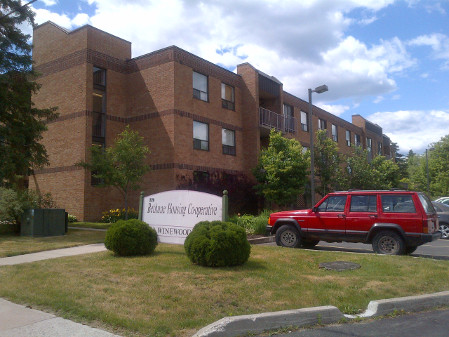
Bethune Housing Co-operative in Gravenhurst

Bethune Housing Co-operative in Gravenhurst

Bethune Housing Co‑operative Inc. is the only non-profit housing co‑operative in Gravenhurst, Ontario.  Bethune’s 31 units are in a low rise building surrounded by trees on the edge of beautiful Muskoka.  Incorporated in 1991, Bethune is a modern building with many fully accessible units, helping to fill a need for affordable housing in this part of Ontario.

Working through its Co‑ordinator and now a property management company, Bethune’s board has called on Iler Campbell LLP for advice primarily on member issues since 2000.  And despite the miles between Gravenhurst and Toronto, we’ve been just a phone call or email away.

Client Profile: Mainstay Housing

July 29th, 2013 by Iler Campbell

This slideshow requires JavaScript.

Mainstay Housing is a non-profit agency working with people who live with mental health and addiction issues and who are deeply affected by poverty.  Mainstay provides housing and ongoing support and opportunities to be part of a community.  Mainstay’s rents are geared-to-incomes and are subsidized by the Ministry of Health and Long Term Care.  Tenants live independently in a variety of housing options with flexible support from Mainstay’s supportive housing workers.  Mainstay is the single largest non-profit provider of supportive housing in Ontario with 1100 residents living in 867 households of singles, couples and families in 41 residential locations across Toronto.  In addition, Mainstay has 88 additional apartments in the private rental market.  Professional staff, from caretakers and maintenance workers, to admin and support staff, work together to ensure the properties Mainstay’s tenants call home are safe, quality places to live.

Continue reading “Client Profile: Mainstay Housing”

Client Profile: Options for Homes Non-Profit Corporation

July 10th, 2013 by Iler Campbell
Danforth Village Estates, one of Options' current projects, on  Danforth Road just north of Eglinton Avenue East.

Danforth Village Estates, one of Options’ current projects, on Danforth Road just north of Eglinton Avenue East.

Options for Homes Non-Profit Corporation (“Options”) is dedicated to providing quality condominium homes in great communities at the best possible price. Over 3,700 new homes have been built using their innovative model, creating great communities of people living in quality homes that are affordable.

Continue reading “Client Profile: Options for Homes Non-Profit Corporation”

Co-op housing eviction reform bill passes 2nd reading

May 22nd, 2013 by Celia Chandler

As PC MPP Peter Shurman noted at Queen’s Park on May 14, 2013, Bill 14, which will reform the evictions process for co-operative housing, took a whopping 15 hours and 36 minutes of debate time in the Ontario Legislative Assembly, but the bill has finally moved to the Legislative Assembly committee for fine‑tuning.   CHF representatives were there and I’m sure will continue to be there throughout to make sure that the sector’s goals are met.

We’re watching this Bill’s progress carefully so that we’re prepared to help our co‑op clients make the transition from one eviction system to another.

In the meantime, we’re working hard with our co‑op clients when they make difficult decisions to evict members who are not meeting the community standard of behaviour.  Our experience at the Landlord and Tenant Board (LTB) tells us that the same issues will apply when co‑ops are under their umbrella:  LTB decision‑makers must weigh issues of fairness and human rights in the same way that Superior Court justices do.   Removing someone’s housing is a decision no‑one ‑‑ from Co‑op Board members to landlords and to decision‑makers ‑‑ wants to make.  We applaud the careful attention that all of these groups must and do give.
