 Subscribe to our RSS feed
 Find us on Facebook
 Follow us on Twitter
This article was first published on rabble.ca.
The story of Dunn House can show an example of how community driven accessible housing projects can be achieved.
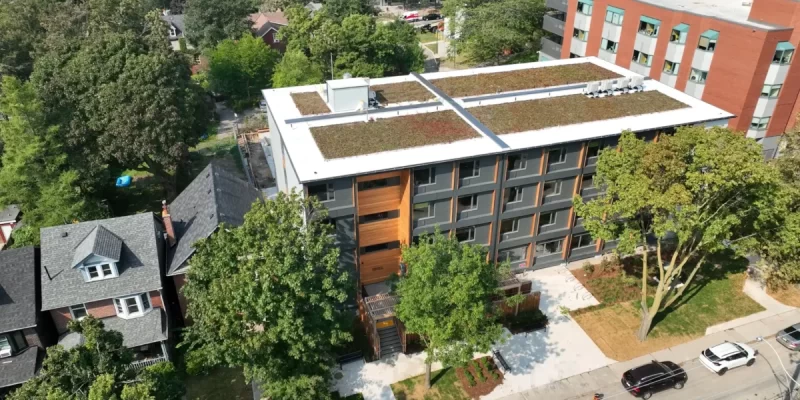
Dunn House at 90 Parkdale, Ave. in Toronto. Credit: University Housing Network
What if, instead of paving paradise to put up a parking lot, we turned a parking lot into housing?
That’s part of the story behind Dunn House, a purpose-built supportive housing project in Toronto’s Parkdale neighbourhood. Developed through a partnership involving University Health Network (UHN), the City of Toronto, United Way Greater Toronto and housing provider Fred Victor, Dunn House provides 51 rent-geared-to-income supportive homes for people experiencing homelessness who also have complex health needs.
Dunn House offers lessons for other communities working to address homelessness, highlighting the importance of stable housing, coordinated health and social services, and sustained support for residents.
Stable housing supports better health
Without a stable home, managing a health condition can become much harder. Supportive housing provides a secure place to live while helping residents access health care and other essential services. It can also strengthen coordination between housing providers and health care professionals, reducing the burden on residents to navigate separate systems.
Residents should help shape their housing
Housing works best when it reflects the needs of the people who live there. Residents should have opportunities to share their experiences and influence decisions about available services. Their input can help housing providers and partners tailor support to individual needs and goals, recognizing that supportive housing is not a one-size-fits-all solution.
Support requires ongoing resources
Operating supportive housing involves more than maintaining a building and collecting rent. Residents may need assistance with daily activities, support for mental health challenges or substance use, and help accessing community services. Depending on their needs, supports may include personal support workers, harm reduction services and connections to health professionals. Housing providers need adequate staffing, resources and partnerships to deliver these services effectively. Planning must therefore account for ongoing operating costs and resident support, not just construction costs.
Government partners need clear responsibilities
Supportive housing projects often involve multiple levels of government and community organizations, each with different responsibilities and funding programs. When construction, housing operations and health services are funded separately, coordinating these elements can be challenging. Partners should establish clear agreements from the outset: Who funds construction and ongoing operations? Who delivers health and social services? And how will changes in funding or residents’ needs be addressed? Clear responsibilities and coordinated funding can help prevent service gaps and give housing providers greater certainty about their ability to support residents over time.
How legal support can help
Legal planning can help housing providers navigate government funding programs for affordable housing development, renovations and supportive housing services. Lawyers can help assess program requirements, review funding agreements and clarify legal obligations. Seeking legal advice early can also help providers identify potential challenges, clarify responsibilities among project partners and plan for the long-term costs of operating their buildings and supporting residents.
Looking ahead
Dunn House offers insights for communities considering similar projects: sustained investment, coordinated services and meaningful resident participation are essential to making supportive housing work over the long term. If the first step is turning a parking lot into purpose‑built housing, the next is ensuring that the people who live there have the support they need to call it home.
